

- University
- Academic
- Schools/Vocational Schools
- Vocational School of Justice
- Vocational School
- Vocational School
- Department of Banking and Insurance (Turkish)
- Department of Computer Programming (Turkish)
- Department of Foreign Trade (Turkish)
- Department of Graphic Design (Turkish)
- Department of Interior Design (Turkish)
- Department of Construction Technology (Turkish)
- Department of Occupational Health and Safety (Turkish)
- Department of Media and Communication (Turkish)
- Department of Architectural Restoration (Turkish)
- Department of Radio and Tv Programming (Turkish)
- Department of Civil Aviation Cabin Services (Turkish)
- Department of Civil Aviation Transportation Management (Turkish)
- Department of Tourism and Hotel Management (Turkish)
- Department of Applied English Translation
- Vocational School Of Health Services
- Vocational School Of Health Services
- Department of Child Development (Turkish)
- Department of Physiotherapy (Turkish)
- Department of Paramedic (Turkish)
- Department of Opticianry (Turkish)
- Department of Medical Documentation and Secreteriat (Turkish)
- Department of Medical Imaging Techniques (Turkish)
- Department of Medical Laboratory Techniques (Turkish)
- Department of Elderly Care (Turkish)
- School of Applied Management Sciences
- School of Foreign Languages
- Faculties
- Faculty of Arts and Sciences
- Faculty of Fine Arts and Design
- Faculty of Law
- Faculty of Communication
- Faculty of Business
- Faculty of Engineering
- Faculty of Engineering
- Department of Computer Engineering
- Department of Biomedical Engineering
- Department of Electrical and Electronics Engineering
- Department of Industrial Engineering
- Department of Food Engineering
- Department of Genetics and Bioengineering
- Department of Aerospace Engineering
- Department of Civil Engineering
- Department of Mechanical Engineering
- Department of Mechatronics Engineering
- Department of Software Engineering
- Faculty of Health Sciences
- Medicine
- Graduate School
- Common Courses
- Schools/Vocational Schools
- Research
- Research Centers
- Library
- Smart Campus
- Technology Transfer Office
- İzmir Sciencepark
- Continuous Education Center (EKOSEM)
- Children's University
- Ethics Committee
- Teaching and Learning Center (EKOEĞİTİM)
- Psychology Application and Research Center
- Researcher Training Coordinatorship
- Research Collaborations And Innovation Coordinatorship
- Campus
- INTERNATIONAL
- Contact
- 25TH YEAR
FACULTY OF FINE ARTS AND DESIGN
Department of Interior Architecture and Environmental DesignIAED 424 | Course Introduction and Application Information
| Course Name |
Space and Children
|
|
Code
|
Semester
|
Theory
(hour/week) |
Application/Lab
(hour/week) |
Local Credits
|
ECTS
|
|
IAED 424
|
Fall/Spring
|
3
|
0
|
3
|
4
|
| Prerequisites |
None
|
|||||
| Course Language |
English
|
|||||
| Course Type |
Elective
|
|||||
| Course Level |
First Cycle
|
|||||
| Mode of Delivery | face to face | |||||
| Teaching Methods and Techniques of the Course | DiscussionQ&ACritical feedbackLecture / Presentation | |||||
| National Occupation Classification | - | |||||
| Course Coordinator | ||||||
| Course Lecturer(s) | ||||||
| Assistant(s) | - | |||||
| Course Objectives | This course examines the concept of childhood in the time being, with a particular focus on its perception within the socio-cultural, spatial, and urban contexts. Since late nineteenth century, ss a social, aesthetic, and psychological construct, childhood has been shaped by spatial arrangements and designed materials. This course promises to analyze these designed elements both as tools for constructing the concept of childhood and as mechanisms for personal and societal development. |
| Learning Outcomes |
The students who succeeded in this course;
|
| Course Description | The course focuses on the design discourses in the context of the evolution of childhood in the modern world, aiming to understand the foundations of contemporary approaches. Nearly every topic is analyzed through the lens of childhood to identify the shifts and ruptures between design approaches and historical periods. |
| Related Sustainable Development Goals |
|
|
|
Core Courses | |
| Major Area Courses | ||
| Supportive Courses |
X
|
|
| Media and Management Skills Courses | ||
| Transferable Skill Courses |
WEEKLY SUBJECTS AND RELATED PREPARATION STUDIES
| Week | Subjects | Related Preparation |
| 1 | Introduction: In Search of the Modern Child | |
| 2 | Spatial Experience by Children | Christopher Day, Design by adults: experience by children, in Environment and Children: Passive Lessons from the Everyday Environment, Elsevier, 2007, 3-7 |
| 3 | Industrialization and Childhood | Juliet Kinchin, Glasgow: Children In the City Beautiful, in Century of the Child: Growing by Design, 1900-2000, MomA, Juliet Kinchin, Aidan O’Cannor (eds) 36-39. Aidan O’Cannor, Chicago: Progressive Era Laboratory, in Century of the Child: Growing by Design, 1900-2000, MomA, Juliet Kinchin, Aidan O’Cannor (eds), pp. 40-43. Juliet Kinchin, Living in Utopia: Children in the Gödöllö Arts and Crafts Colony, in Century of the Child: Growing by Design, 1900-2000, MomA, Juliet Kinchin, Aidan O’Cannor (eds) pp. 50-53. |
| 4 | Kindergarten Movement | Group work: Analysis of the images from Pestalozzi-Froebel Haus: class, domestic activities, field trips, spiritual motherhood and arise of Feminism |
| 5 | Light, Air and Health: Housing | Regine Hess, Halls, “Huts,” and Houses: Large Exhibitions, Prefabrication, and Housing, in Between Conventional and Experimental: Mass Housing and Prefabrication in Modernist Architecture, 2024, pp. 185-208. |
| 6 | Light, Air and Health: Park Regulations | Group Work: Analysis of existing playgrounds: Park regulations, health regulations, Industrialization and existing urban pattern. |
| 7 | Body Regulation: Children in Russia & German Youth Movement, Italy, Japan, Great Britain and Colonial West Africa | Juliet Kinchin, Pioneering the Revolution: Children in Soviet Russia, , in Century of the Child: Growing by Design, 1900-2000, MomA, Juliet Kinchin, Aidan O’Cannor (eds), pp. 122-124. Kenny Cupers, Governing through nature: camps and youth movements in interwar Germany and the United States, Cultural Geographies, April 2008, Vol. 15, No. 2 (April 2008), pp. 173-205. |
| 8 | Midterm Week | |
| 9 | Regulating the Child: Children and Youth in Ottoman Case and Emerging Turkey Guest Lecturer | Group Work: Analysis of cartoons from children’s journals and analysis of children cloths: Depiction of a children, Children’s Rights, citizenship, the changing concept of childhood: from a small adult to a infant. |
| 10 | Schooling: Child Cooperatives and Open - Air Education Movement | Mia Roth-Cerina, Infrastructures of Childcare: Establishing the Modern Language of Zagreb’s Schools in the Agency of Ivan Zemljak, in Docomomo 18 Proceeding Book, 2024, pp. 174-181. Louise Noelle Gras Gas, Catherne Rose Ettinger, Educating Modern Children: Local Solutions and Standardised Construction, in Docomomo 18 Proceeding Book, 2024, pp. 161-167. Requel Franklin Unkind, Learning Through Experience: Johann Heinrick Pestalozzi’ Pedagogy in Hannes Meyer’s Educational Building Projects, in Docomomo 18 Proceeding Book, 2024, pp. 167-174. |
| 11 | Playtime: Toys, Playgrounds, Sport activities | Group Work: Analysis of children’s play: imaginative fantasy, materials, industry |
| 12 | Power Play: Disneyland, Shopping Malls, Mc Donald’s | Suzi Mirgani, Designing the Shopping Mall, in Target Markets, 45-73, transcript Verlag. 2017. Karal Ann Marling, Disneyland, 1955: Just Take the Santa Ana Freeway to the American Dream, American Art , Winter - Spring, 1991, Vol. 5, No. 1/2 (Winter - Spring, 1991), pp. 168-207. |
| 13 | The School-Reform | Group work: Writing a short essay: How to design universal child? |
| 14 | Children and Digitalization: Games | Guest Lecturer |
| 15 | Individual presentations by students: Critical Analysis of a designed material for children, a fairy tale, a game, a cloth, a toy, a school, a playground or children’s room | |
| 16 | Review of the semester |
| Course Notes/Textbooks |
|
| Suggested Readings/Materials |
EVALUATION SYSTEM
| Semester Activities | Number | Weigthing |
| Participation |
1
|
10
|
| Laboratory / Application | ||
| Field Work | ||
| Quizzes / Studio Critiques | ||
| Portfolio | ||
| Homework / Assignments |
1
|
40
|
| Presentation / Jury |
1
|
50
|
| Project | ||
| Seminar / Workshop | ||
| Oral Exams | ||
| Midterm | ||
| Final Exam | ||
| Total |
| Weighting of Semester Activities on the Final Grade |
3
|
100
|
| Weighting of End-of-Semester Activities on the Final Grade | ||
| Total |
ECTS / WORKLOAD TABLE
| Semester Activities | Number | Duration (Hours) | Workload |
|---|---|---|---|
| Theoretical Course Hours (Including exam week: 16 x total hours) |
16
|
3
|
48
|
| Laboratory / Application Hours |
16
|
0
|
|
| Study Hours Out of Class |
14
|
1
|
14
|
| Field Work |
0
|
||
| Quizzes / Studio Critiques |
0
|
||
| Portfolio |
0
|
||
| Homework / Assignments |
3
|
12
|
36
|
| Presentation / Jury |
1
|
22
|
22
|
| Project |
0
|
||
| Seminar / Workshop |
0
|
||
| Oral Exam |
0
|
||
| Midterms |
0
|
||
| Final Exam |
0
|
||
| Total |
120
|
COURSE LEARNING OUTCOMES AND PROGRAM QUALIFICATIONS RELATIONSHIP
|
#
|
Program Competencies/Outcomes |
* Contribution Level
|
|||||
|
1
|
2
|
3
|
4
|
5
|
|||
| 1 |
To be able to perform, execute and manage the various responsibilities and duties of an interior architecture and environmental design professional |
-
|
-
|
-
|
-
|
-
|
|
| 2 |
To be able to recognize, analyze and integrate within their practice the particular local and regional needs and developments of their profession |
-
|
-
|
X
|
-
|
-
|
|
| 3 |
To be able to communicate and collaborate with other individuals and groups on a national and international level within their profession |
X
|
-
|
-
|
-
|
-
|
|
| 4 |
To be able to develop, integrate and promote independent critical approaches for their professional practice |
-
|
X
|
-
|
-
|
-
|
|
| 5 |
To be able to understand the social and environmental issues and responsibilities of their profession |
X
|
-
|
-
|
-
|
-
|
|
| 6 |
To be able identify, assess and utilize the most up to date research, innovations, trends and technologies |
-
|
-
|
X
|
-
|
-
|
|
| 7 |
To be able to consider the national and international standards and regulations of their field |
-
|
-
|
-
|
-
|
-
|
|
| 8 |
To be able to develop the abilities to communicate and present design ideas within visual, oral and textual formats |
-
|
-
|
-
|
-
|
-
|
|
| 9 |
To be able to adopt a multidisciplinary approach to design on a national and international level |
-
|
-
|
-
|
-
|
-
|
|
| 10 |
To be able to recognize their own strengths, and develop them within an environment |
-
|
-
|
-
|
-
|
-
|
|
| 11 |
To be able to collect data in the areas of interior architecture and environmental design and communicate with colleagues in a foreign language |
-
|
-
|
-
|
-
|
-
|
|
| 12 |
To be able to speak a second foreign at a medium level of fluency efficiently |
-
|
-
|
-
|
-
|
-
|
|
| 13 |
To be able to relate the knowledge accumulated throughout the human history to their field of expertise |
-
|
-
|
-
|
-
|
-
|
|
*1 Lowest, 2 Low, 3 Average, 4 High, 5 Highest



















NEWSALL NEWS


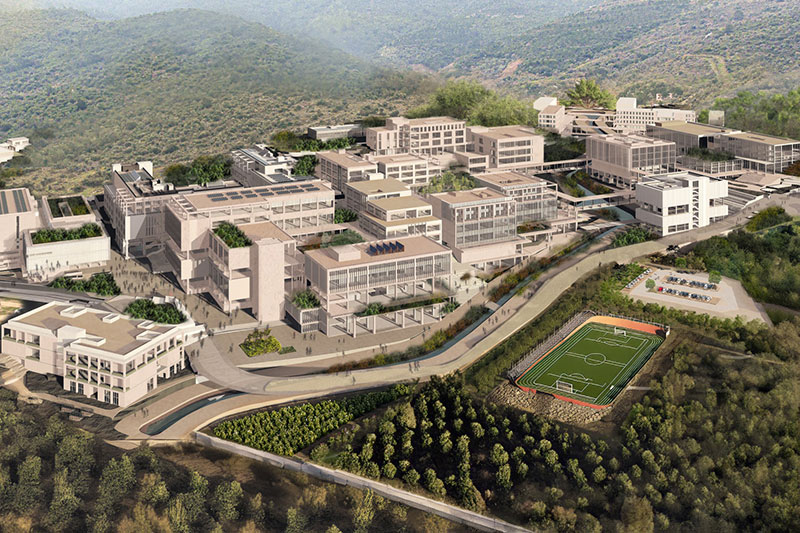
IZMIR UNIVERSITY OF ECONOMICS GÜZELBAHÇE CAMPUS
DetailsGLOBAL CAREER
As Izmir University of Economics transforms into a world-class university, it also raises successful young people with global competence.
More..CONTRIBUTION TO SCIENCE
Izmir University of Economics produces qualified knowledge and competent technologies.
More..VALUING PEOPLE
Izmir University of Economics sees producing social benefit as its reason for existence.
More..
You are one step ahead with your graduate education at Izmir University of Economics.